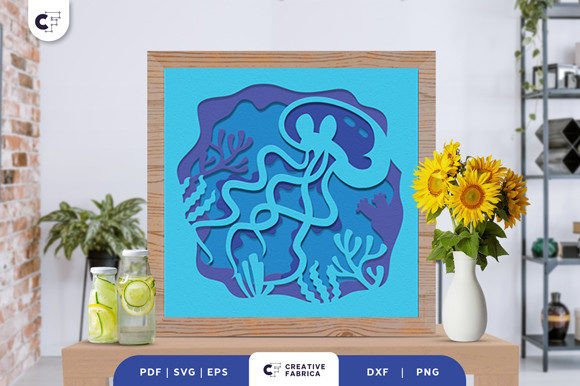
Jellyfish Underwater 3D Shadow Box SVG for Summer
In the fast-paced world of content marketing and brand strategy, visual assets are rarely just decorative; they are functional tools designed to stop the scroll and communicate a mood instantly. As a brand designer who frequently audits graphic design assets for small business clients, I recently evaluated the Jellyfish Underwater 3D Shadow Box SVG for a potential seasonal campaign. The goal was to determine if this specific SVG design could elevate a lifestyle brand's summer collection without compromising professional branding standards.
Upon first inspection, the asset delivers exactly what its title promises: a layered, dimensional aesthetic that mimics the depth of paper-cut art. The mood it creates is serene yet exotic, evoking the tranquil mystery of ocean life. For a brand looking to pivot into a Summer theme, this illustration offers a sophisticated alternative to the usual flat, cartoonish beach icons. It suggests a handcrafted quality that resonates deeply with audiences who value artisanal products and thoughtful creative design. The emotional tone is calming and inviting, making it highly suitable for lifestyle content, wellness promotions, or boutique product launches where the vibe needs to feel organic rather than corporate.
Strategic Application in Modern Marketing Campaigns
The true test of any digital product like this is its versatility across various marketing channels. In a hypothetical real-world scenario, imagine a coastal skincare line launching a new hydrating serum. The Jellyfish Underwater 3D Shadow Box SVG becomes the anchor for their brand identity refresh during the warmer months. Because the file is a vector-based 3D SVG, it scales infinitely without losing quality, which is critical for maintaining visual hierarchy whether it is used on a massive trade show banner or a tiny Instagram story sticker.
For social media graphics, this asset shines by adding texture to otherwise flat feeds. It works exceptionally well as a background element for Pinterest pins, where the layered shadows create depth that encourages clicks. When adapted for digital ads or Facebook covers, the intricate details of the jellyfish tentacles can frame key copy, guiding the viewer's eye naturally toward the call-to-action. Furthermore, for businesses selling physical goods, this design translates beautifully into packaging design and product label applications. Imagine a die-cut sticker on a shipping box or a foil-stamped accent on a product sleeve; the shadow box effect implies premium quality, thereby boosting audience trust before the customer even opens the package.
Elevating Visual Consistency and Audience Perception
One of the primary challenges for small business branding is maintaining consistency while keeping content fresh. This design bundle element supports that goal by providing a strong thematic hook that can be repeated across different mediums. Using the same jellyfish motif in editorial design for a blog header, an email banner, and a downloadable lead magnet creates a cohesive narrative. This repetition builds stronger recognition and makes the campaign visuals more memorable.
The asset also aids in achieving a professional branding look because it avoids the "clipart" trap. Many free illustrations look generic and cheap, which can undermine a brand's authority. However, the complexity and artistic style of this illustration suggest a custom commission, lending an air of exclusivity to the marketing materials. It helps establish an emotional connection with the audience, signaling that the brand cares about aesthetics and detail. This is particularly effective for coaches, creators, and sellers in the creative marketplace who need to stand out in saturated niches.
Ideal Use Cases and Strategic Limitations
To maximize the return on investment for this graphic design asset, it is essential to deploy it where its strengths are most visible. It works best as a hero graphic for campaign headers, a focal point for product launch visuals, or a decorative element in branded templates. It adds significant value to content bundles and promotional banners where the goal is to evoke a specific seasonal feeling. In web design, it serves as an excellent section divider or a subtle watermark that adds character without overwhelming the layout.
However, caution is required. This asset should be used carefully in formal corporate branding where minimalism and stark professionalism are paramount. The intricate layers of a 3D SVG can become muddy if placed on low-contrast backgrounds or if the colors clash with an existing strict brand palette. Additionally, it is not suitable for dense information layouts or text-heavy ads where the detailed lines of the jellyfish might compete with the main message, reducing readability. On very small mobile graphics, the fine details of the shadow box effect might disappear, so simplification or cropping may be necessary for those specific formats.
Practical Designer Notes for Implementation
Before integrating the Jellyfish Underwater 3D Shadow Box SVG into a client project or a paid campaign, several practical steps ensure optimal results. First, test the asset against your specific brand color palette. While the original design may feature ocean blues and teals, recoloring the layers to match your brand tones can create a more unified look. Always check how the design performs in black and white, especially if you plan to use it for monochrome printing or fax-friendly documents.
Placement is key. Insert the graphic into real campaign mockups to see how it interacts with photography and typography. Preview the final composition on mobile screens to ensure the visual hierarchy remains intact on smaller displays. Test readability by placing text over or near the jellyfish; ensure there is enough negative space so the text does not get lost in the intricate cuts. Experiment with font pairings—this organic shape pairs wonderfully with clean sans serif fonts for a modern look, elegant script fonts for a feminine touch, or bold display fonts for a striking contrast.
Finally, always review spacing and balance. A common mistake in content marketing is overcrowding the design. Let the jellyfish breathe. Most importantly, confirm the commercial license terms before using this in client work or business branding. Understanding the rights associated with this printable design or Canva template integration ensures you are protected legally while leveraging this stunning design asset to drive engagement and growth.